



Removing phosphorus from wastewater before releasing it into the environment is crucial to prevent the harmful effects of eutrophication. Traditionally, wastewater treatment plants have used chemical dosing with ferric salts to remove phosphorus as iron salts. However, new regulations require more efficient phosphorus removal preferably using methods that do not rely on chemicals, power, or additional water, or produce sludge.
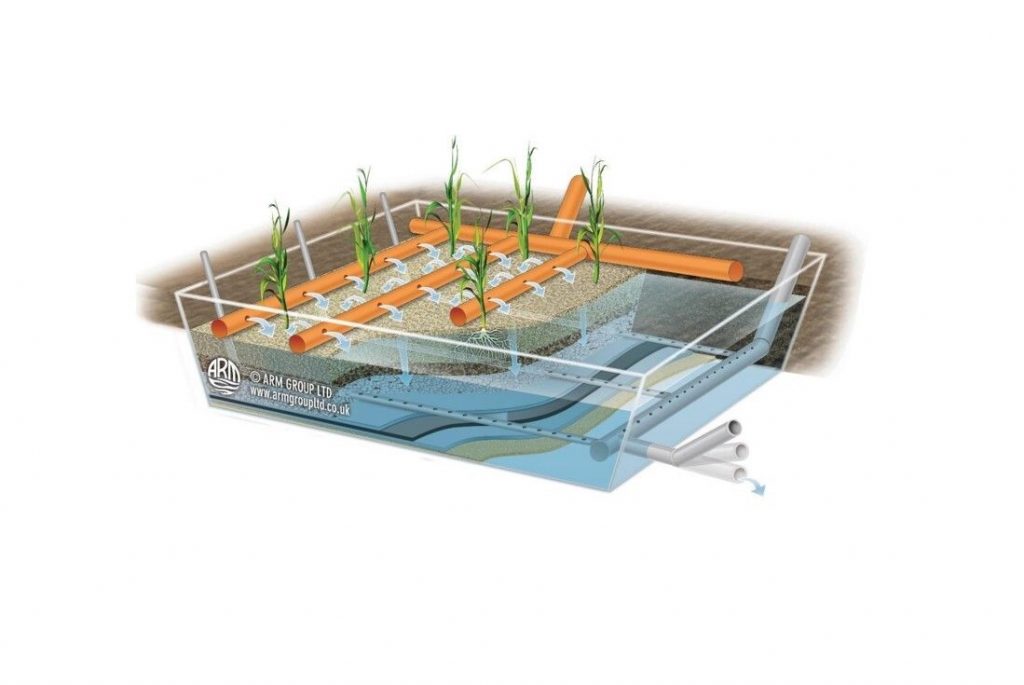
ARMPhos® uses a reactive media derived from naturally occurring rock phosphate, to enhance phosphorus removal through a two-phase process. First, phosphate binds to the media through adsorption and crystallisation. Subsequently, calcium-phosphate complexes that have formed in the effluent form and crystallise on the adsorbed phosphate, which can then be filtered out.
ARMPhos® emerged as the best solution after testing various reactive media for a low-powered low-maintenance, no moving parts phosphorus treatment solution. Initial attempts with rock phosphate-based beads and cement binders faced issues affecting performance. The current solution uses raw, graded rock phosphate, ensuring enhanced reactivity, and minimal pH impact.
Optimal performance is achieved with this media, which offers increased surface area and higher binding capacity. Systems generally need refurbishment every 8-12 years and spent media has the potential be reused in the refurbished bed or as fertiliser.
ARMPhos® is cost-effective, reducing the need for chemical addition, sludge processing storage and disposal, and promotes sustainability by potential reuse of media, aligning with circular economy principles. ARMPhos® offers a significant advancement in sustainable wastewater treatment, providing an efficient and eco-friendly alternative to traditional chemical methods.